
Letter of Authenticity for Sports Memorabilia: What It Proves

A letter of authenticity for sports memorabilia is a written opinion from an independent expert that an item is genuine. The best ones also show how the expert reached that conclusion.
That second part is what separates a letter that adds value from one that's just paper. Plenty of items come with a certificate. Far fewer come with evidence.
Here's how to read one, how it differs from a certificate of authenticity (COA), and how to get one for a game-worn piece.
What is a letter of authenticity for sports memorabilia?
A letter of authenticity (LOA) is an authenticator's signed opinion about one specific item. In sports memorabilia it usually answers one of three questions:
Is the autograph real?
Was the item actually worn or used in games?
Is it the exact item from a specific, documented game or moment?
That last question is the hardest to answer. It's what photo matching is for.
A good letter names the item, says what was examined, and explains the reasoning. The authenticator puts their name and reputation behind it.
LOA vs. COA: what's the difference?
People use the two terms loosely. In practice they usually mean different things.
Certificate of authenticity (COA) | Letter of authenticity (LOA) | |
|---|---|---|
Usually written by | The seller, dealer, or manufacturer | An independent authenticator |
What it says | "This is genuine." | Why it's genuine, and what was checked |
Evidence included | Rarely | Often: observations, comparisons, photos |
Weight at auction | Low, unless from a respected source | Higher, depending on who issued it |
The real question is independence. A COA from the person selling the item is the seller vouching for their own product. That isn't worthless. It just isn't proof.
How to tell a strong letter from a weak one
Before you trust a letter, or pay more because of one, check these five things.
1. Who issued it
Look the authenticator up. Have major auction houses accepted their letters? Do they specialize in what you're buying? Autograph experts and game-used experts are often different companies.
2. What exactly it covers
Read the wording slowly. "Authentic signature" says nothing about game use. "Game-issued" doesn't mean game-worn. "Consistent with game use" is a long way from "photo matched to a specific game."
If the listing claims more than the letter does, believe the letter.
3. Whether it shows its work
A strong letter explains its reasoning: tagging, materials, repairs, and wear. For a photo-matched item, it includes the side-by-side images that tie it to a specific game.
A letter that only says "authentic" is asking you to take it on faith.
4. Whether you can verify it
You should be able to contact the authenticator and confirm they issued the letter. If the company can't be found or doesn't answer, treat the letter as unverified.
5. Whether it matches the item in your hands
Player, team, season, size, tags, and any unique marks should all line up. A generic letter that could describe any jersey from that season is a red flag.
Where league authentication fits
Some leagues run their own programs. The MLB Authentication Program has authenticators witness items being used or signed, then applies a hologram with a unique code you can look up online.
If your item has one of those holograms, start there. Many older items, and plenty of game-worn pieces, never went through a league program. That's where an independent letter and photo matching come in.
Why photo matching matters for game-worn items
Most letters can only say a jersey is consistent with game use. Photo matching goes a step further. It compares the item against period photographs and video to prove it's the exact piece worn in a documented game.
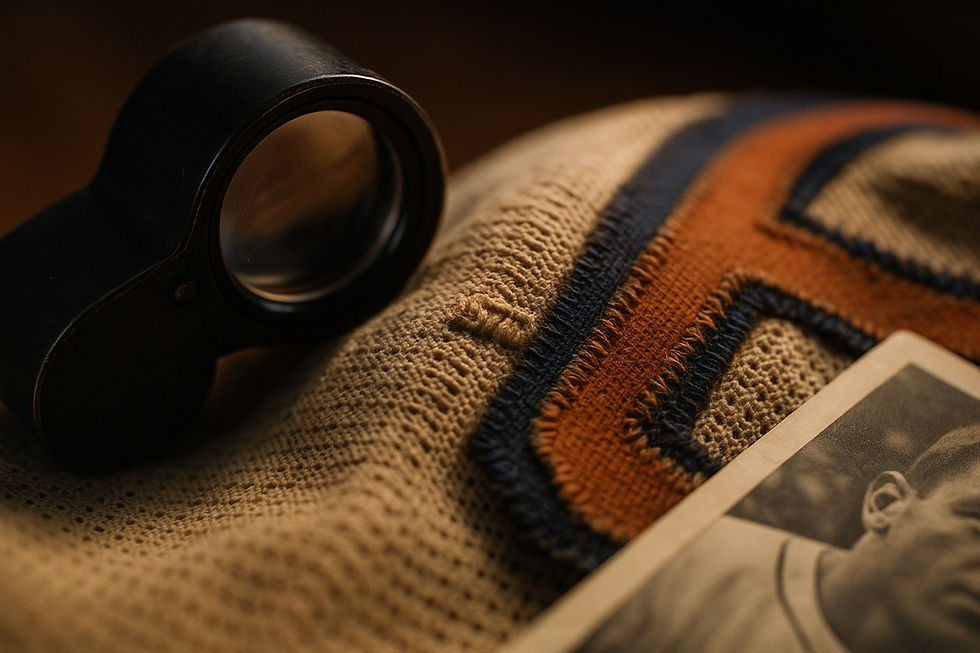
Every game-worn jersey picks up its own marks. Lettering sits slightly differently. Tears get repaired. Tags, stains, and fabric wear are unique.
When enough of those details line up with a dated photo, the jersey stops being "a 1990s game jersey." It becomes the jersey from that game. Bidders pay for that kind of specificity.
You can see how we do it on our photo matching services page.
How to get a letter of authenticity for a game-worn item
Gather what you know: where the item came from, past owners, and any paperwork, tags, or holograms.
Photograph it in good light. Get the front, back, tags, numbers, repairs, and any marks.
Pick an independent authenticator who specializes in your kind of item. For game-worn pieces, ask whether they photo match.
Ask what they need up front, then submit the item and its details.
When the letter comes back, check it against the five points above. Keep it with the item for good.
About SIA Photo Match
SIA Photo Match, known at auction as Sports Investors, has authenticated sports, music, film, and cultural memorabilia since 2014. We photo match items against period photographs and video, and our letters show the photo evidence behind each match.
Our letters have accompanied lots at Goldin, SCP Auctions, and Lelands.
We authenticate. We don't run auctions. Our job is to tell you what the evidence shows. More about us.
Think you have an item from a specific game or moment? Submit it for review.
Frequently asked questions
Is a COA the same as a letter of authenticity?
Not usually. A COA is often written by the seller. An LOA usually comes from an independent authenticator and explains what was examined. What matters most is who wrote it and whether it shows evidence.
Can I write my own certificate of authenticity?
Anyone can write one. It only carries weight if the writer is independent and trusted. A seller's own COA is a promise, not proof.
Does a letter of authenticity guarantee an item is real?
No letter is a guarantee. It's an expert opinion backed by evidence, which is why the authenticator's track record matters so much.
What's the difference between game-worn, game-used, and game-issued?
Game-issued means it was made for or given to a player but may never have seen a game. Game-worn and game-used mean it was actually worn or used in competition. Photo matching can show which game.
How do I check if a letter of authenticity is real?
Contact the authenticator to confirm they issued it. Then make sure the description matches your item exactly.
About the author
David Randolph is the Managing Member of SIA Photo Match. He started as a collector. After seeing too many game-worn jerseys that were mislabeled, faked, or misrepresented, he turned that hobby into an authentication business. He brings IT forensic analysis from a career in technology sales to photo matching game-used memorabilia. More about David and his articles.
Comments